You need a UV water purifier for your well if a test finds coliform or E. coli bacteria, or if your well is the kind that lets surface water in after heavy rain. A UV system treats bacteria as water flows past a lamp, with no chemicals added, but it only works on clear water, so in most Valley homes it goes in after the filters and softener, not instead of them.
What a UV System Does
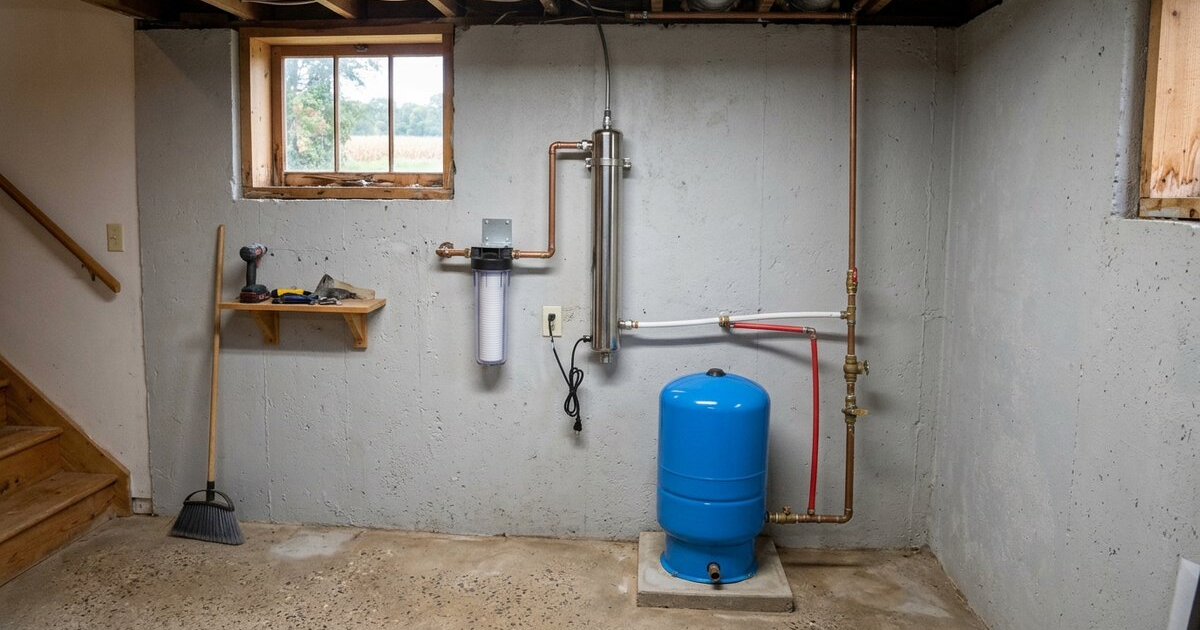
A UV system is a stainless steel chamber with a special lamp inside a glass sleeve. Water flows through the chamber on its way to your taps. The ultraviolet light damages the bacteria, viruses and cysts in the water so they can't multiply and make you sick.
Three things set UV apart from other well treatment:
- No chemicals. Nothing is added to your water, so there is no chlorine taste or smell.
- It works at the point of entry. One unit on the main line treats every tap in the house.
- It treats, then stops. UV leaves nothing behind in the pipes. Water is treated as it passes the lamp, and that's it.
That last point matters. UV is a final step, not a cure for a well that is taking in surface water. If the well itself has a problem, such as a cracked cap or a casing that lets runoff in, that needs fixing too.
Signs Your Well Needs UV
Most people find out they need UV from a water test, not from how the water looks. Bacteria have no colour, taste or smell. These are the common reasons a Valley homeowner ends up with one:
1. A Test Found Coliform or E. Coli
This is the clearest sign. Total coliform bacteria in a well suggests surface water may be getting in. E. coli points to contamination from human or animal waste. Either result is a reason to treat the water and to look at the well itself.
The CDC advises well owners to test their well water at least once each year for total coliform bacteria, nitrates, total dissolved solids and pH. If you have never had a bacteria test, start there.
2. Your Water Changes After Heavy Rain
Cloudy water, a new taste or an earthy smell after a storm can mean surface water is reaching the well. Much of the Shenandoah Valley sits on limestone, where water can move quickly from the surface down to groundwater. Shallow wells, older dug wells and springs are the most exposed.
3. You Have a Shallow, Dug or Spring-Fed Supply
Many older farmhouses around Broadway, Timberville and Elkton still run on a dug well or a spring. These sources are close to the surface. Even when a test comes back clean, many owners add UV for peace of mind.
4. Someone in the House Is More Vulnerable
A new baby, an older parent or anyone with a weakened immune system is a common reason to add UV. The CDC also lists a pregnancy or a child moving in as reasons to test your well.
5. You Are Buying a Home on a Well
A home sale is a good time to test. If the bacteria test comes back positive, UV is often part of the fix, along with shock chlorinating the well and retesting.
What UV Can't Do
UV is good at one job. It does not:
- Remove hardness, so you still get scale and spots without a softener.
- Remove iron, manganese or sulfur, so orange stains and rotten egg smells stay.
- Remove chemicals such as nitrates, pesticides or lead.
- Fix low pH or blue-green stains from acidic water.
- Clear up cloudy or sandy water.
That is why a water test comes first. It shows what else is in the water, so the UV is one part of a system that fits.
Why UV Needs Clear, Pretreated Water
UV light has to reach the bacteria to treat them. Sediment, iron and hardness get in the way. Particles can shade bacteria from the light, and iron and hardness leave a coating on the glass sleeve around the lamp, which blocks more light every week.
Nova Scotia's environment department sets out the water quality a UV system needs to work well, unless the manufacturer says otherwise. Its guide to UV disinfection lists hardness under 120 mg/L, iron under 0.3 mg/L and manganese under 0.05 mg/L, and says to "pre-treat water prior to UV disinfection" if needed and to filter it to 10 microns or less.
Many Valley wells are well over those numbers. A Virginia Cooperative Extension study of Rockingham County household water named iron and manganese, hardness, total dissolved solids and bacteria as the county's main water problems. So on a typical Rockingham County well, the order looks like this:
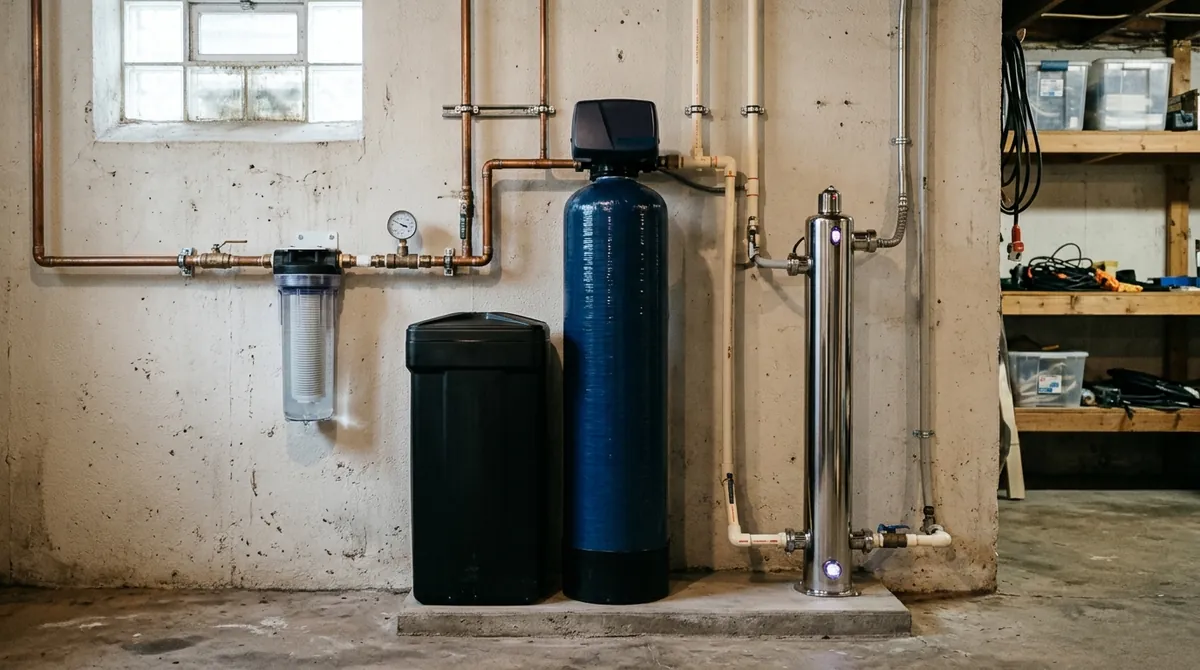
- Sediment filter to catch sand and grit.
- Iron or sulfur filter, if the test shows iron, manganese or a rotten egg smell.
- Softener, if the water is hard.
- UV system last, so it treats clear water.
Our guide to choosing a well water treatment system explains each of those stages in more detail.
What Goes Into a UV System Price
We don't publish a single price, because the system depends on your water and your house. These are the things that move the number:
- Flow rate. The unit has to keep up with your household's peak use, such as two showers and the washer at once. A bigger house needs a bigger chamber.
- Pretreatment. A home that already has a filter and softener may only need the UV unit. A home with hard, iron-heavy water and no treatment needs the stages ahead of it too.
- Where it goes. A basement with room on the main line is simple. A tight crawlspace or a line that needs new valves and a bypass takes more work.
- Electrical. A UV unit runs all the time and needs an outlet nearby.
- Upkeep. The lamp, the glass sleeve and the sediment cartridge all need attention over time.
Our free basic water test tells us which of these apply before we quote. You'll know what the system includes and why.
Living With a UV System
A UV unit is quiet and simple once it is in, but it is not something to forget about.
- Leave it on. The lamp needs power all the time. Water that flows while the power is out is not treated, so ask us what your unit's maker recommends after an outage.
- Replace the lamp on schedule. The lamp dims long before it burns out. Follow the maker's schedule for your unit. Many controllers show a countdown or sound an alarm when the lamp is due.
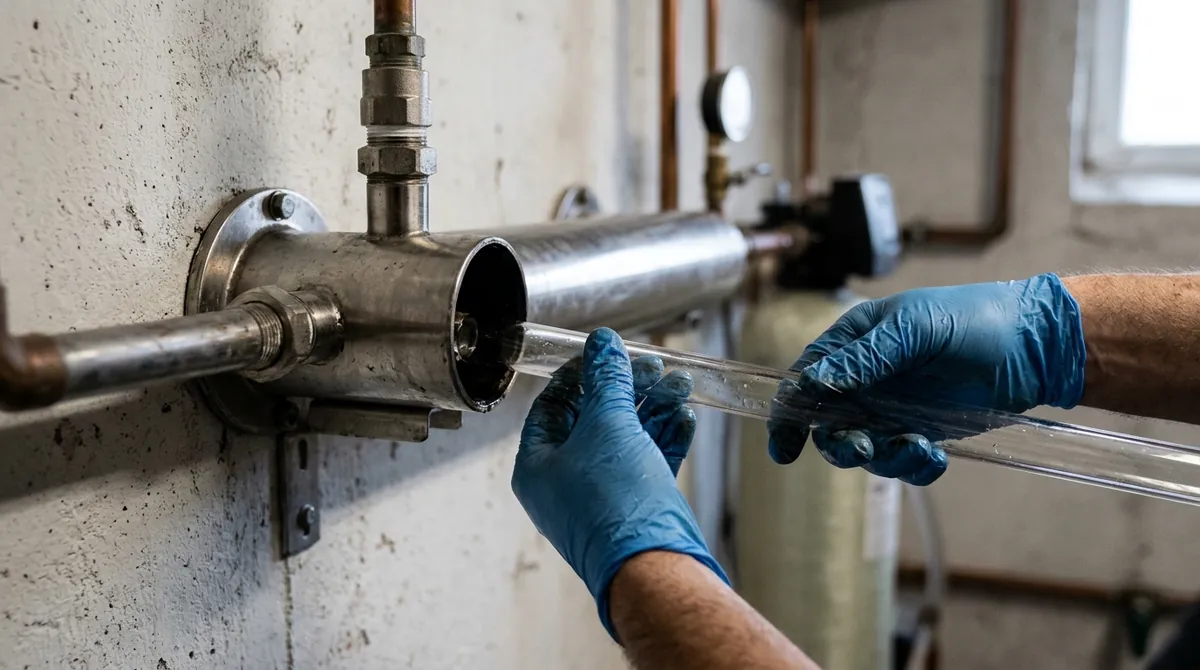
- Clean the sleeve. If the sleeve gets a coating, less light reaches the water.
- Change the sediment cartridge ahead of the UV so it stays clear.
- Retest the water. The Nova Scotia guide recommends a bacteria test every three months for water treated with UV. At the very least, test once a year, as the CDC advises for every well.
Ask about maintenance plans when you get your quote if you'd rather not keep track of lamps and cartridges yourself.
How We Install UV in the Shenandoah Valley
Here is how a UV install works with us, from our shop in Linville:
- Test first. We start with a free basic water test at your tap. It is not lab-certified, and a bacteria result needs a certified lab. We look at hardness, iron and the other things that decide what has to go ahead of the UV.
- Look at the well and the plumbing. We check where the water line enters the house and where a UV unit, valves and an outlet can go.
- Explain your options. We tell you what we'd install and why, and you decide.
- Install. Most installs are finished in a single visit.
- Show you how it works. Customers mention that our team takes time to explain their equipment, so you know what the alarm means and when the lamp is due.
Read more about the system on our UV water purification page, or see our well water treatment page for the full treatment line.
Bacteria in Your Well Test?
Pure Water Pure Air installs UV water purification systems across Harrisonburg, Broadway, Dayton, Elkton and the rest of the Shenandoah Valley. We test your water first, so the UV unit gets the clear water it needs to work.
Call (540) 830-7963 or book a free water test. We are open Monday to Friday, 8am to 5pm. Leave a message after hours and we will call you back.