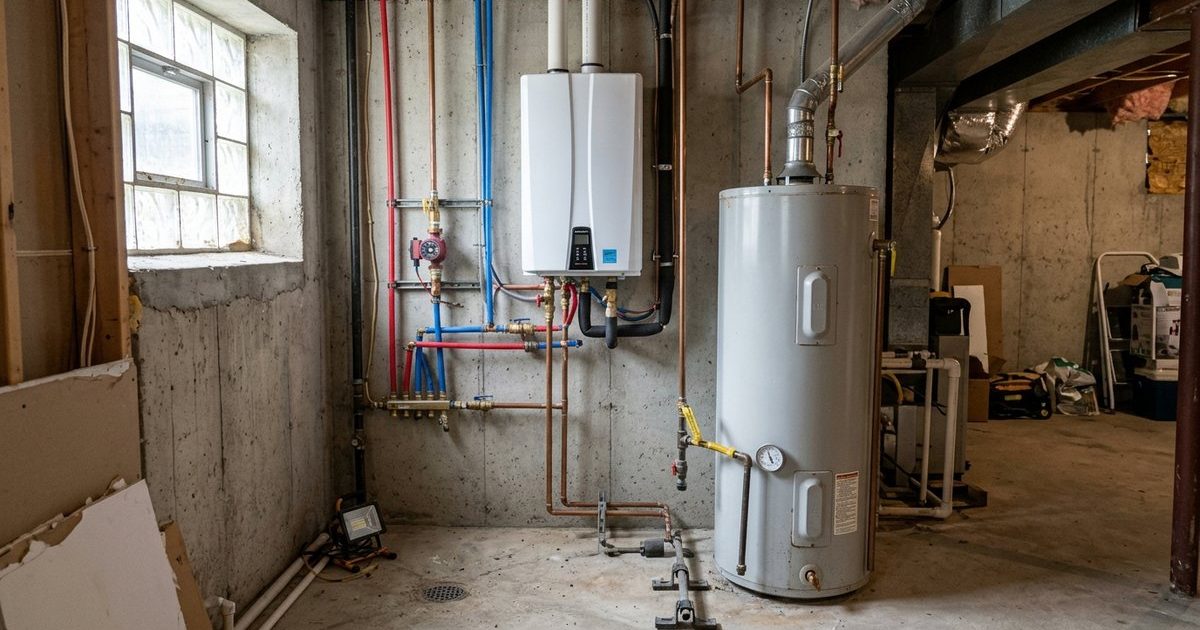
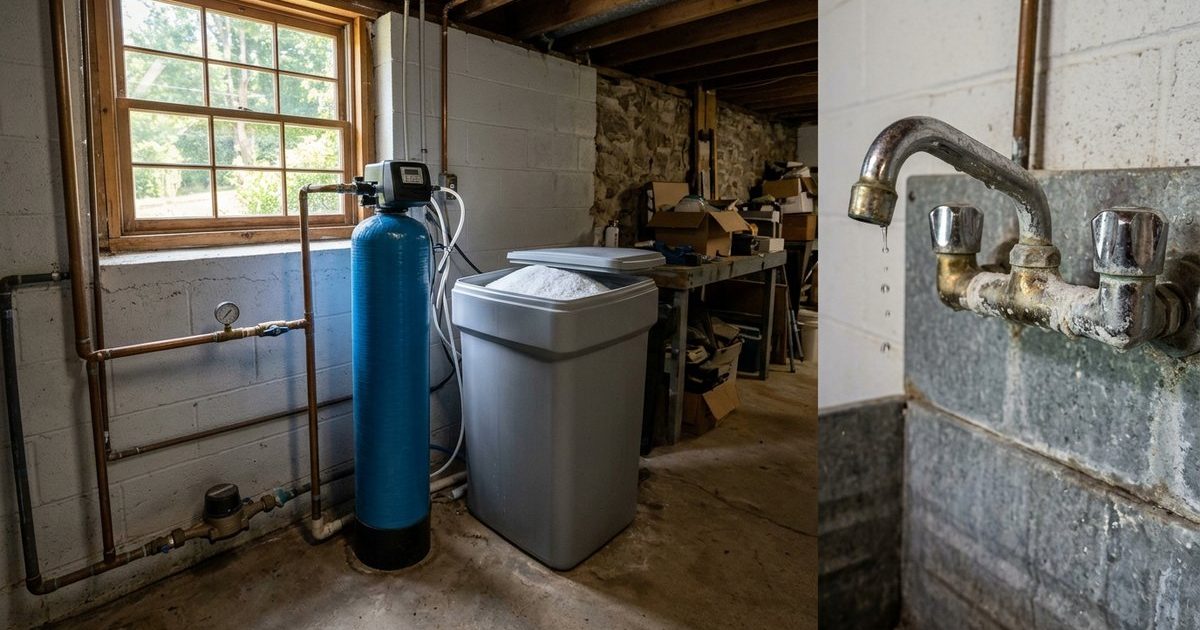
The clearest sign your water softener needs repair is that hard water symptoms come back: white spots on glasses, crust on faucets, and soap that will not lather. Other signs show up at the brine tank, such as salt that never goes down or a tank full of standing water. Many of these are simple fixes, but some point to worn resin or a failing valve, and that is when it is worth asking if replacement makes more sense.
Why Softeners Wear Out Faster in the Valley
A softener works by passing your water through a tank of resin beads. The beads trap calcium and magnesium. When they are full, the softener regenerates: it rinses the resin with salty brine from the brine tank, then goes back to work.
That cycle runs again and again. In the Shenandoah Valley, it runs harder than in many places. Much of the area sits on limestone, so water from wells around Linville, Broadway and Timberville is often very hard, and many wells carry iron too.
Iron is hard on a softener. Penn State Extension notes that oxidized iron "will clog the resin", and that "in some instances, resins can not be washed of contaminants and will need to be replaced." That is why a softener on a Valley well often needs more attention than one on city water.
7 Signs Your Water Softener Needs Repair
1. Spots and Scale Are Back
White spots on dishes, crust on shower heads and a film on glass doors are the first thing most people notice. If they return after months of soft water, the softener is not doing its job. The cause could be as simple as an empty brine tank or a wrong setting, or as serious as worn resin.
2. The Salt Level Never Goes Down
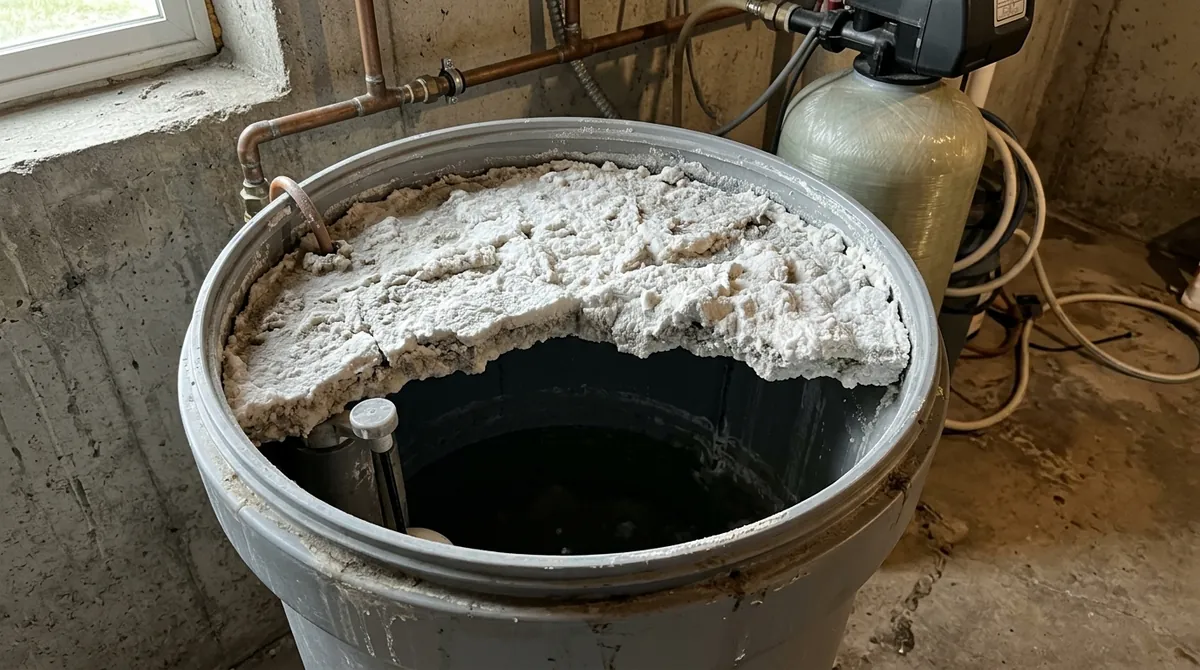
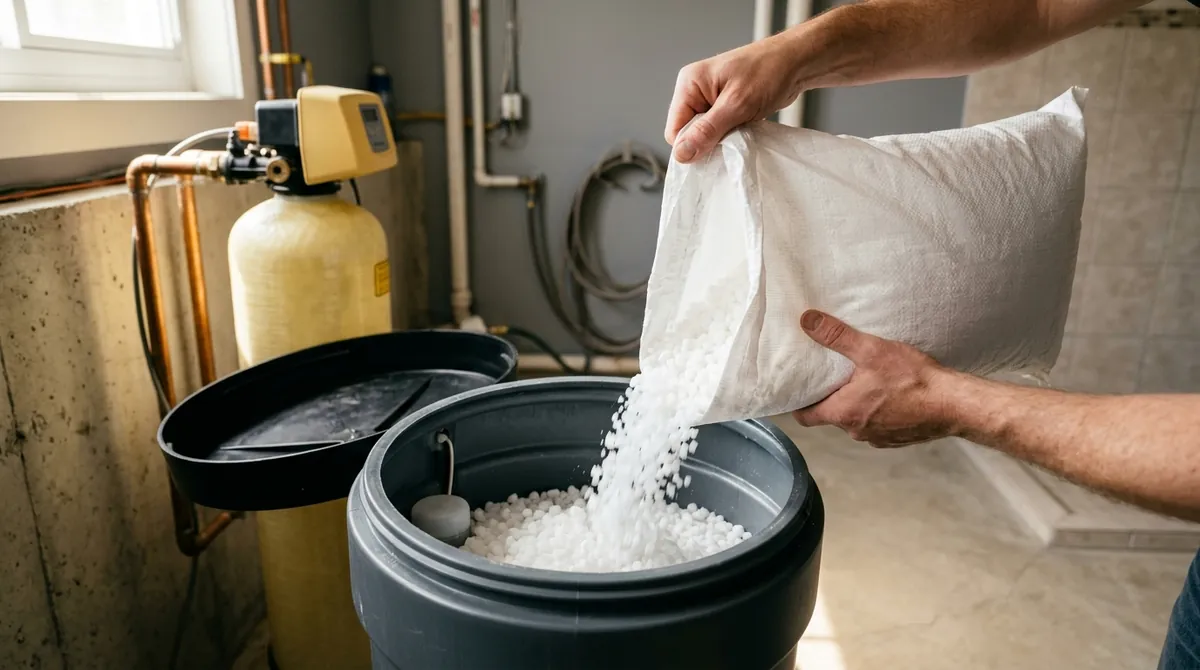
A softener uses salt every time it regenerates. If the level in the brine tank stays the same week after week, the system may not be regenerating at all. A common cause is a salt bridge, a hard crust that forms across the tank. Salt sits on top of it and never reaches the water below.
3. Water Standing in the Brine Tank
A little water at the bottom of the brine tank is normal for many models. A tank that is half full or more points to a problem: a clogged brine line, a stuck float, or a control valve that is not drawing brine out.
4. Orange Stains or a Rotten Egg Smell Return
On a well, these are often signs that the iron or sulfur part of your system is not keeping up. If you have a softener handling some iron, rust-coloured stains in sinks and toilets can mean the resin is fouling. If you have a separate iron filter, its media may be spent or it may not be backwashing.
5. Low Water Pressure Through the House
If every tap feels weaker, the problem may be in the treatment system. A packed or fouled resin bed, or a clogged filter cartridge ahead of the softener, can choke the flow to the whole house.
6. The Control Valve Shows an Error or the Wrong Time
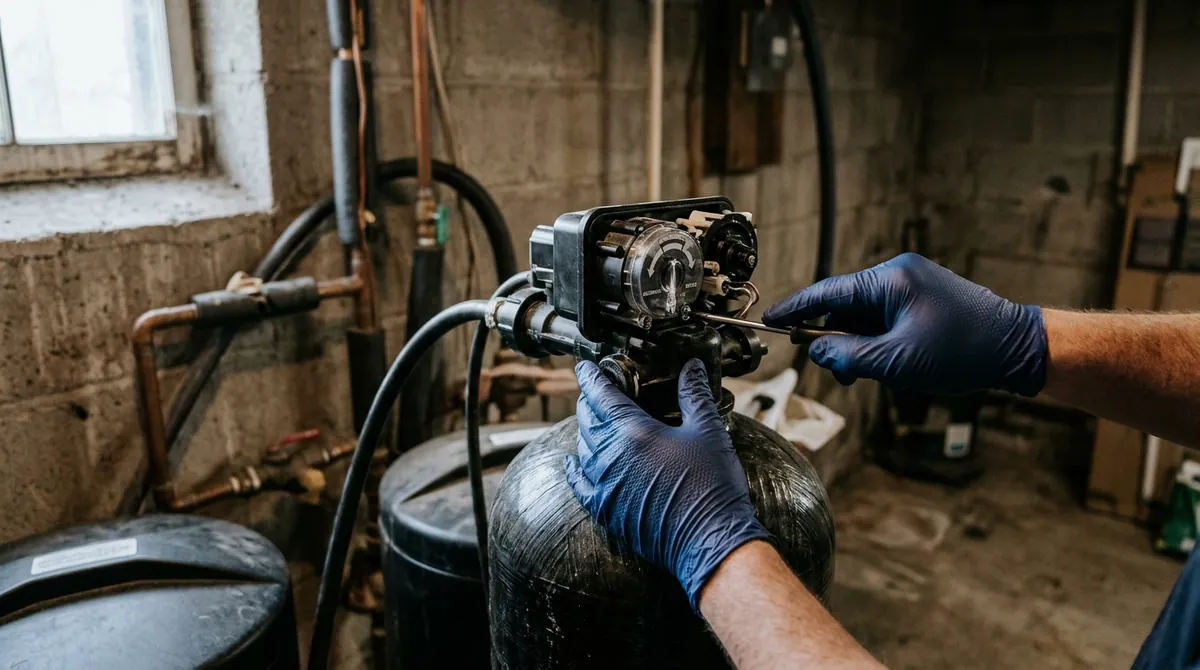
The control valve on top of the tank decides when to regenerate. After a power outage, the clock may reset and the system may regenerate in the middle of the day, when you are using water. An error code or a dark display can point to a failing part.
7. The System Runs Nonstop or Makes Noise
A softener that drains water constantly, or makes a grinding or humming sound from the valve, often has a worn seal, piston or motor inside. Water running to the drain all day also shows up on a well pump that cycles more than it should.
What You Can Check Yourself First
Before you call, a few quick checks can save a visit:
- Look at the salt. Is there salt in the brine tank? Is it a hard crust on top? Push gently on it with a broom handle. If it breaks and there is a gap below, you found a salt bridge.
- Check the bypass valve. Someone may have turned the system to bypass during a plumbing job and never switched it back.
- Check the clock and settings. Reset the time after a power outage.
- Look for kinked or loose lines between the brine tank and the softener, and at the drain line.
If none of these fixes it, the problem is likely inside the valve or the resin tank, and that is a job for a technician.
Repair or Replace?
Most softener problems can be repaired. A stuck valve, a bad seal, a clogged injector or a salt bridge are common, fixable faults. A media or resin change can bring an older tank back too.
Replacement starts to make more sense when:
- The resin is fouled and cannot be cleaned. As Penn State Extension notes, some resin cannot be washed clean and has to be replaced. If the tank and valve are also old, a new system may be the better value.
- Parts are hard to find. Some older control valves are no longer supported.
- Your water has changed. A new well, more people in the house, or iron that was never treated may mean the old system was never the right size.
- Repairs keep stacking up. If you have called for service several times in a short span, put the next repair bill next to the cost of a new system.
Either way, a water test settles the question. It shows if the softener is still removing hardness, and if iron or another problem needs its own treatment.
What a Repair Visit Looks Like With Us
Here is how we handle softener and filter service from our shop in Linville:
- Tell us the brand. Call with the brand, its age if you know it and what you are seeing. We tell you if we can service it.
- Check the whole system. We look at the control valve, bypass, brine tank, salt and resin, and check the settings against your water.
- Test the treated water. A free basic water test on site shows if the system is still removing hardness or iron. It is not lab-certified, but it tells us where things stand.
- Explain before we change anything. We tell you what we found and what it will take. You decide before we change parts, media or cartridges.
Customers mention that our team takes time to explain how their equipment works, so you know what to watch for next time.
Read more on our water softener and filter repair and maintenance page. If it turns out to be time for a new system, our water softener installation page explains how we size one to your water, and our guide to what drives water softener cost in Harrisonburg covers the price side.
Keeping a Softener Working Longer
A little upkeep goes a long way:
- Keep salt in the brine tank and check it monthly.
- Break up crusts before they become a bridge.
- Treat iron before it reaches the softener, if your well has it.
- Reset the clock after power outages.
- Ask about maintenance plans when you have the system serviced.
Softener Acting Up in the Shenandoah Valley?
Pure Water Pure Air services water softeners and filters across Harrisonburg, Bridgewater, Broadway and the rest of the Shenandoah Valley. We test your water, find the cause and tell you plainly whether repair or replacement makes more sense.
Call (540) 830-7963 or contact us to book a service visit. We are open Monday to Friday, 8am to 5pm. Leave a message after hours and we will call you back.