The cost of a reverse osmosis system in Harrisonburg depends on five things: the system and how many filter stages it has, the storage tank, the faucet and how it fits under your sink, any pre-treatment your water needs to protect the membrane, and the filter changes that follow. The system is only part of the price. On a Valley well, pre-treatment and upkeep often matter as much as the unit itself.
We don't price reverse osmosis over the phone, because two homes on the same street can need different setups. This guide explains what goes into a quote, so you can compare quotes on what they include and not just the total.
What a Reverse Osmosis System Is
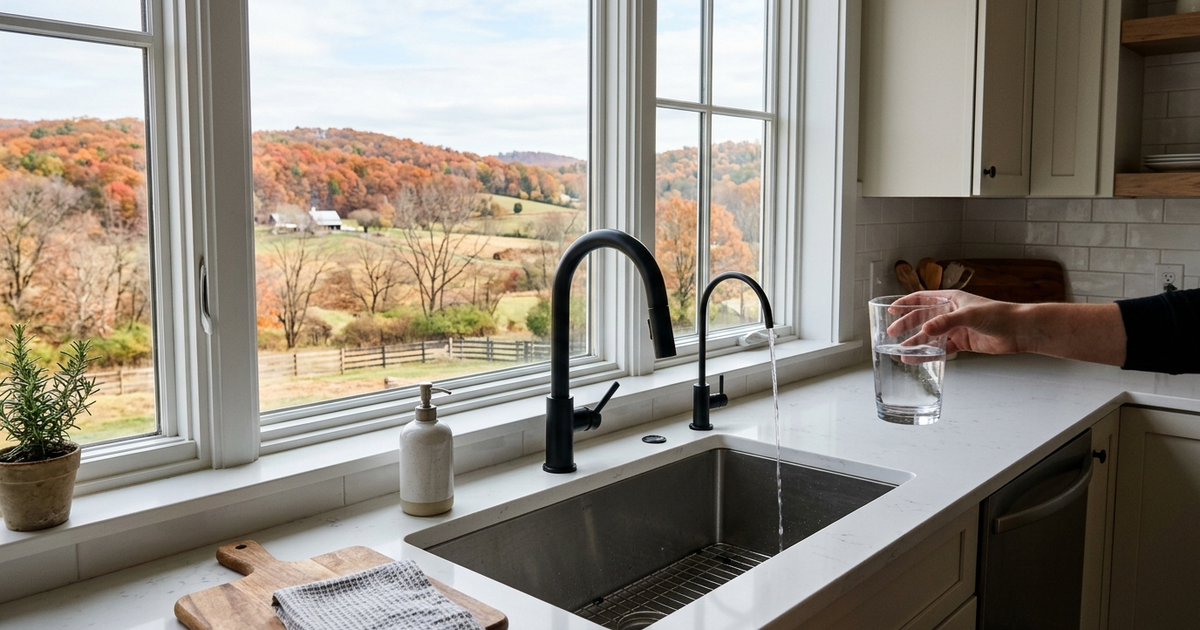
Reverse osmosis, or RO, pushes water through a membrane with microscopic holes that holds back much of what is dissolved in it. Virginia Cooperative Extension describes RO units as typically point-of-use devices that reduce the concentration of most dissolved impurities. In a home, that means one system under the kitchen sink, a small storage tank, and a separate faucet for drinking and cooking water.
RO treats one tap, not the whole house. If you are weighing it against a whole-house filter, our guide to reverse osmosis vs a whole-house filter covers that choice. This post is about what an RO install costs once you know you want one.
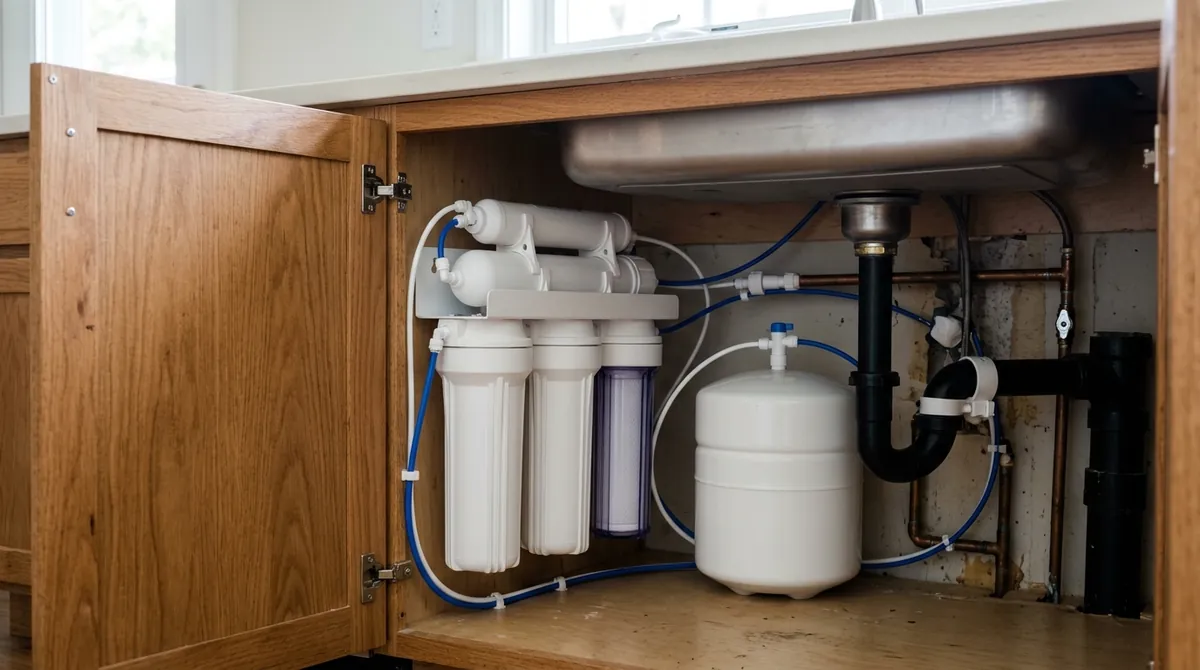
The System and Its Stages
Most under-sink RO systems have a few stages in a row:
- A sediment prefilter that catches grit and rust flakes before they reach the membrane.
- A carbon prefilter that takes out chlorine on city water, which can damage some membranes.
- The RO membrane itself, which does most of the work.
- A carbon postfilter that polishes the taste of the water as it leaves the tank.
Some systems add more stages, such as a remineralizing filter that adds a little mineral back for taste. More stages and a higher daily output usually mean a higher price. More stages are not always better, though. The right system is the one matched to your water.
The Storage Tank
An RO membrane makes water slowly, so the system fills a small pressurized tank under the sink. The tank's size and type change the cost. A larger tank holds more water for a busy kitchen but takes more cabinet space. Most homes do fine with a standard tank. A household that fills a lot of pots or water bottles may want a bigger one.
Some newer systems are tankless and make water on demand. They cost more up front and need an electrical outlet under the sink, but they free up cabinet space.
Faucet, Fit and Extra Lines
The install itself is part of the price. Things that change it:
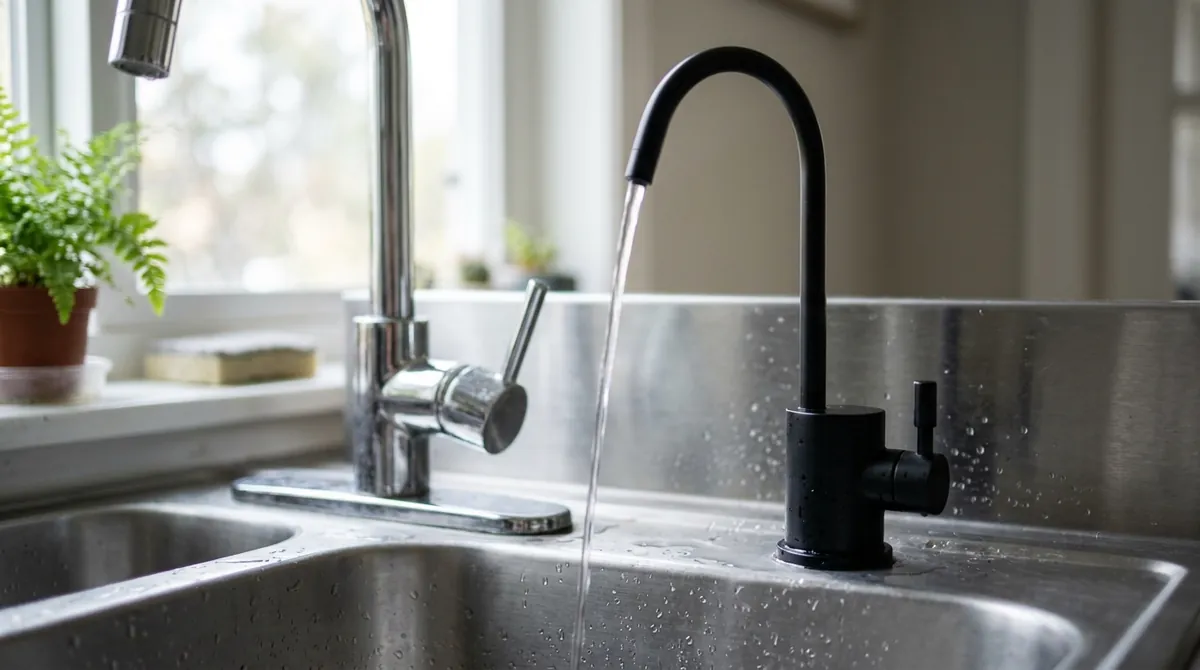
- The faucet hole. If your sink has a spare hole, such as one for a sprayer or soap pump, we can often use it. If not, a new hole in the sink or countertop adds work.
- Cabinet space. A garbage disposal, a deep sink or a crowded cabinet can make the fit tighter.
- The drain connection. RO needs a drain line for the water it rinses off the membrane.
- A fridge or ice maker line. Running RO water to the fridge adds tubing and fittings, and the cost goes up with the distance and the route.
Pre-Treatment on Well Water
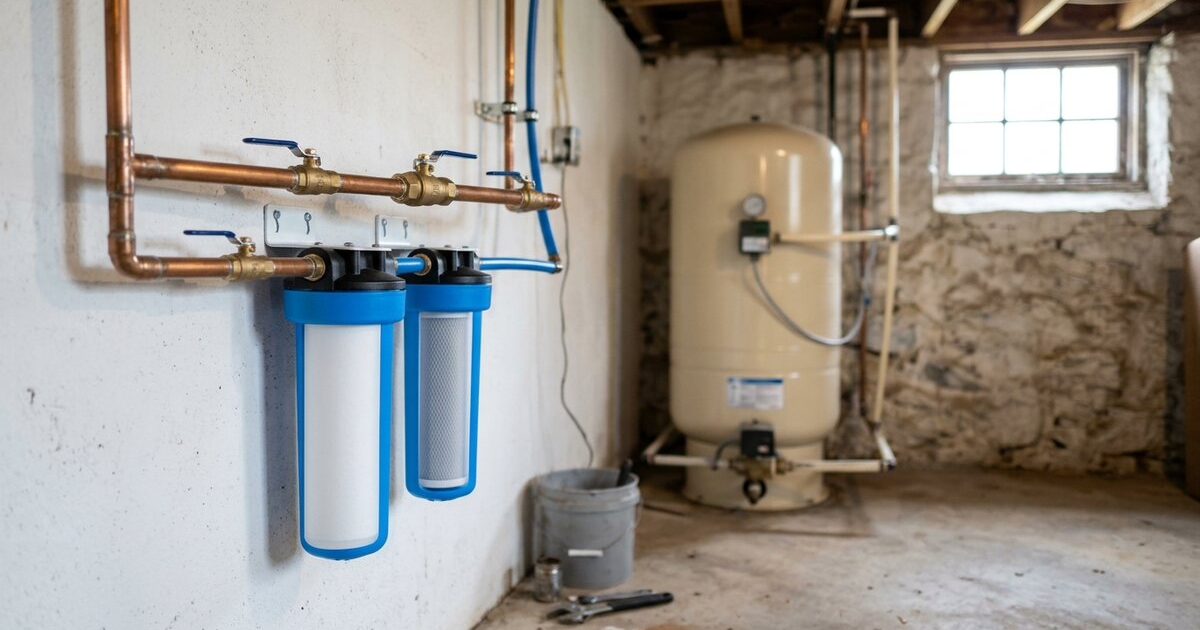
This is the item that most often changes an RO quote in the Shenandoah Valley. Valley wells draw from limestone, so the water is often hard, and many wells carry iron.
Virginia Cooperative Extension warns that hard water can quickly foul an RO membrane, and that a sediment prefilter is often used to protect it. Iron and manganese can foul it too. On a well with very hard water or iron, a softener or iron filter ahead of the RO system protects the membrane, so it lasts as long as it should.
That doesn't mean every well home needs more equipment. If your house already has a softener, RO at the kitchen sink is often a simple add-on, and it lowers the sodium a softener adds to your drinking water. If the well has iron or a rotten egg smell, our guide to which filter fixes sulfur smell and iron stains explains what goes first.
RO is also not a bacteria treatment. Virginia Cooperative Extension says RO units are not typically recommended for bacteria. If your well may have coliform, test it at a certified lab and look at UV water purification.
Filter Changes and Water Use
The running cost of RO is small but real, and a fair quote mentions it.
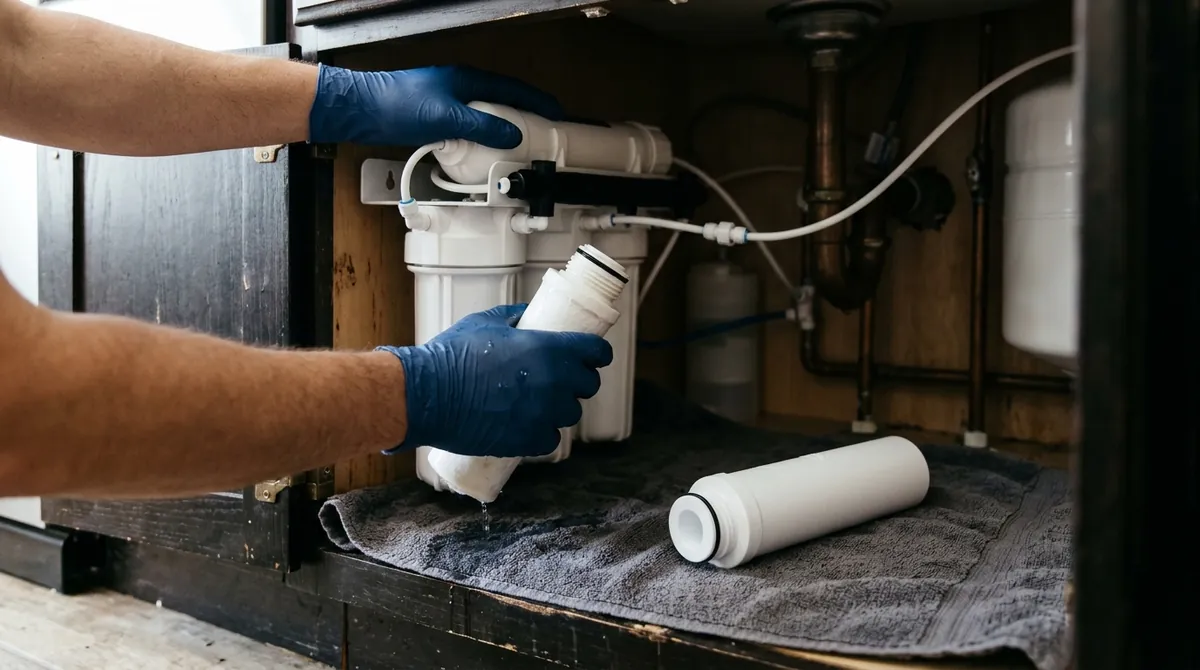
- Filter changes. The pre and post filters need changing on a schedule, and the membrane lasts longer. Virginia Cooperative Extension says maintenance involves periodically replacing the RO membrane and any associated filters, following the maker's schedule. How often depends on the system, your water and how much you use.
- Water to the drain. RO rinses the membrane with water that goes down the drain. Virginia Cooperative Extension says that on many units only 10 to 20 percent of the water entering the system comes out as treated water. Newer, more efficient systems waste less. Because RO only serves drinking and cooking water at one sink, the total stays modest for most homes.
Ask us about maintenance plans for filter changes when you get your quote.
Location in the Valley
Travel from our shop in Linville plays a small part. Homes in Harrisonburg, Broadway, Timberville and Dayton are close by. Homes farther out in the Valley are still served, and the quote tells you up front.
What a Good RO Quote Lists
Before you compare prices, check that each quote names:
- The system model and how many stages it has.
- The tank size, or whether it is tankless.
- The faucet, and whether a new hole is needed.
- Any fridge or ice maker line.
- Any pre-treatment, such as a softener or iron filter, and why your water needs it.
- The filter change schedule and what replacement filters cost.
- Whether the equipment is certified by an independent third party, such as NSF International. Virginia Cooperative Extension recommends this for any water treatment equipment.
A quote that skips the water test, or offers the same system for every home, is worth a second look.
Is Reverse Osmosis Worth It?
For many homes, yes. If you buy bottled water every week, don't like the taste of your tap water, or have a softener and want lower-sodium drinking water, RO gives you filtered water from its own faucet. If your main problem is stains, smell or scale through the whole house, RO alone won't fix it, and a whole-house system should come first.
How We Quote Reverse Osmosis
- Call us. Monday to Friday, 8am to 5pm.
- Free basic water test. We test at your kitchen tap and you see the results right there. It is not a lab-certified test.
- Check the sink. We look at the cabinet, the drain and where the faucet will go.
- Clear quote. We explain the system that fits, how the filters and membrane are changed, and the price, before you decide.
- Install and walk-through. Most under-sink installs are done in one visit. We flush the system and show you how it works.
See our reverse osmosis drinking water systems page for more, or start with our free in-home water testing.
Thinking About Reverse Osmosis in Harrisonburg?
Pure Water Pure Air installs under-sink reverse osmosis systems in Harrisonburg, Broadway, Mount Jackson and across the Shenandoah Valley, from our family-owned shop in Linville. Test your water first, and we will explain what it needs before we change anything.
Call (540) 830-7963. We are open Monday to Friday, 8am to 5pm. Leave a message after hours and we will call you back. Virginia contractor license 2710018903.