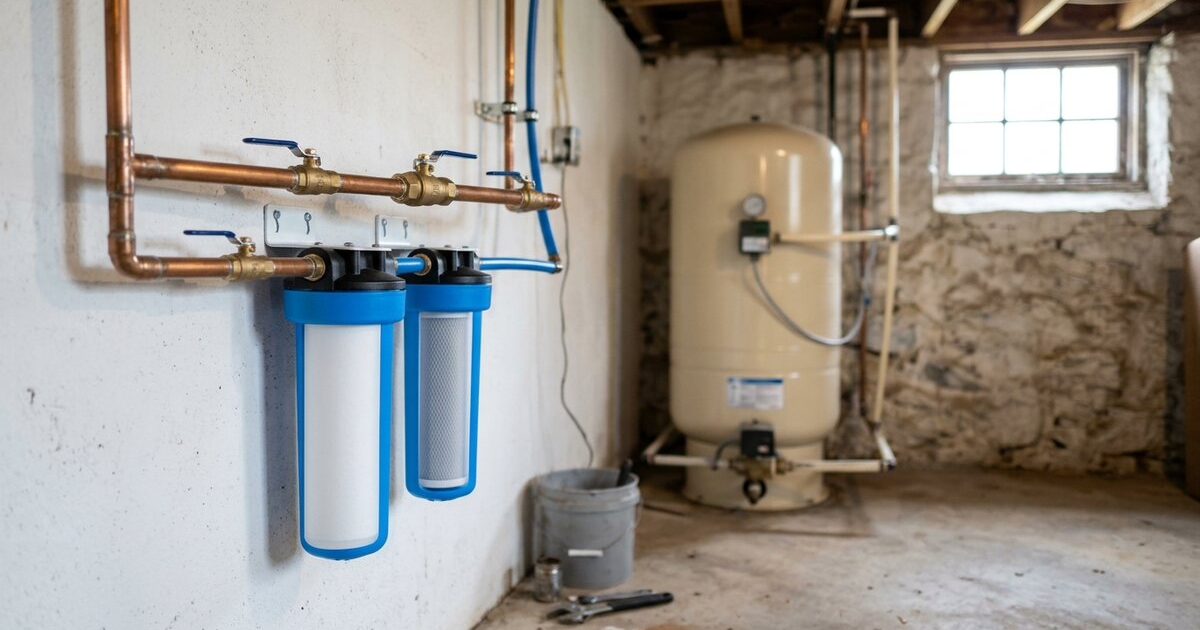
The cost of a whole-house water filter comes down to four things: what the filter has to catch, how much water your home uses at once, whether it uses cartridges or a larger media tank, and how much plumbing work the install takes. A single sediment filter on an open basement line sits at the low end, while a sediment and carbon pair sized for a big house, or a filter that has to go in a tight crawlspace, costs more. We quote after a free basic water test at your home, so the price matches the water you actually have.
Why There Is No Single Price
Two homes on the same road can need very different filters. One is on Harrisonburg city water and only wants the chlorine taste gone. The next is on a well that sends grit through the faucets after every heavy rain. Both are "whole-house filters", but they are not the same job.
A whole-house filter, also called a point-of-entry filter, treats water where it comes into your home. The CDC puts it simply: whole-home filters "filter water as it comes into your home," so every tap, shower and appliance gets filtered water. That is why the size and type matter so much. The filter has to keep up with the whole house, not one sink.
So rather than give a number that fits nobody, here is what moves the price up or down.
What Drives Whole-House Water Filter Cost
1. What the Filter Has to Remove
Most whole-house setups in the Valley do one or both of these jobs:
- Sediment. A sediment filter catches sand, grit and fine dirt. This is the common need on a well.
- Chlorine taste and smell. A carbon filter takes these out. This is the common need on town water in Harrisonburg, Elkton or New Market.
A single sediment stage is the simplest system. A sediment and carbon pair costs more, because it is two stages, and the sediment stage goes first so grit does not clog the carbon early.
If the water also has iron, a rotten egg smell or hardness, those need their own stage. A plain sediment or carbon filter will not fix them. That is where costs change most, and it is why we test first.
2. How Much Water Your Home Uses at Once
The filter has to keep up with your busiest moment, such as two showers and the washing machine running together. A small filter on a big house drops your water pressure. A larger housing or a bigger tank costs more, but it keeps the pressure steady.
The number of bathrooms and people in the house are the quick guide here. We size the filter to your home's flow so you keep good pressure at every tap.
3. Cartridge Housings or a Media Tank
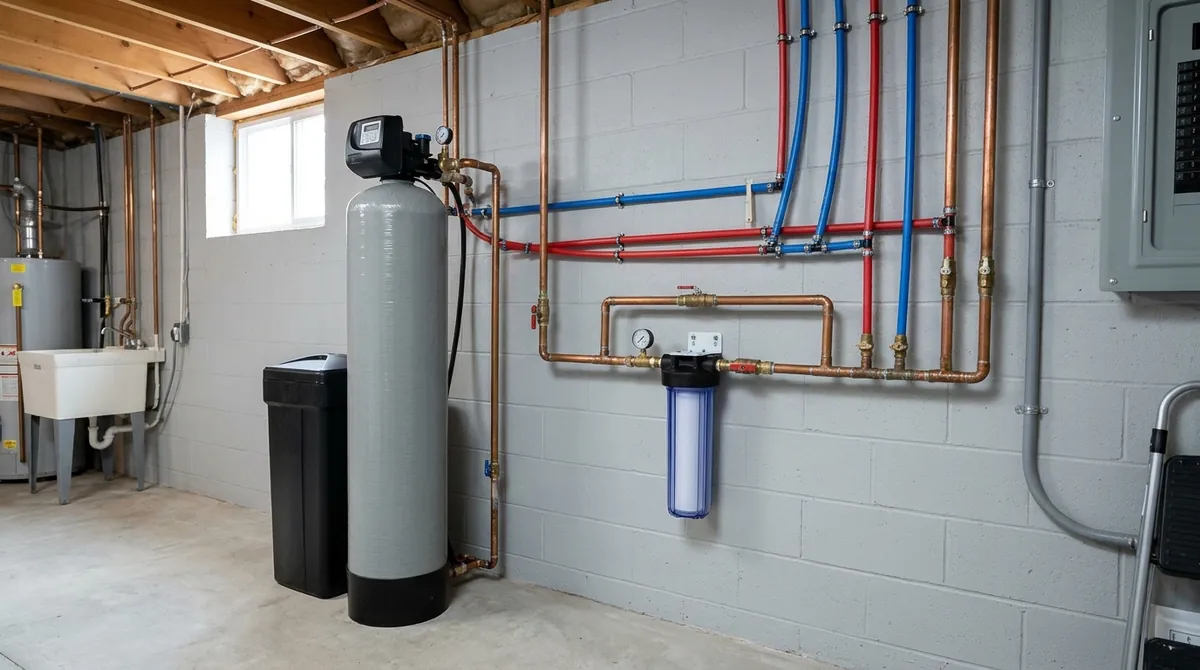
Whole-house filters come in two main styles:
- Cartridge housings. One or more canisters hold a cartridge that you replace. They cost less to put in and take little space. The trade off is the ongoing cost of new cartridges.
- Media tanks. A taller tank filled with filter media, often with a control valve that rinses it. They cost more up front and take more floor space, but there are no cartridges to buy.
Which one is right depends on your water and how much upkeep you want. A home with a lot of sediment can go through cartridges fast, which can make a tank worth the higher upfront cost.
4. The Install Itself
The filter goes on the main line, where water enters the house. These things change the install cost:
- Where the line comes in. An open basement wall is simple. A tight crawlspace, a garage or a finished utility room takes more time.
- Bypass valves. We fit a bypass so you can change cartridges or service the filter without shutting off water to the whole house.
- Old plumbing. Older farmhouse plumbing sometimes needs new fittings or valves before a filter can go in.
- Other equipment. If a softener, iron filter or UV system is already on the line, the new filter has to fit in the right order.
- Travel. Distance from our shop on Route 42 in Linville plays a small part.
Most whole-house filter installs are finished in a single visit.
The Ongoing Cost: Cartridges and Upkeep
The price on the quote is not the whole story. Every filter needs care, and that adds up over the years.
The CDC says you will need to maintain any filter you use, which includes regularly changing the filters according to the manufacturer's recommendations. How often depends on the filter, how much grit or chlorine is in your water and how much water you use. A drop in water pressure is a common sign a cartridge is full.
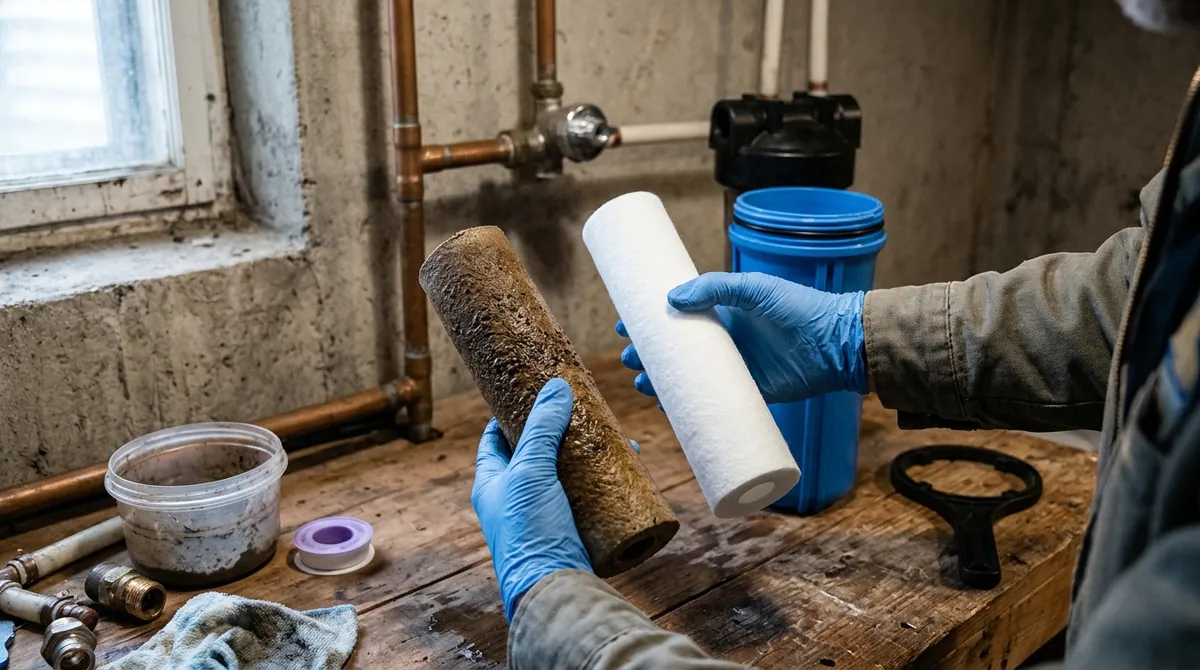
Two things keep upkeep costs down:
- The right size. A filter that is too small for your water fills up fast and needs more changes.
- The right order. A sediment stage ahead of carbon, iron or UV equipment protects the more costly parts behind it.
Ask about maintenance plans when you get your quote if you would rather not keep track of cartridge changes yourself.
City Water vs Well Water in the Valley
Where you live in the Valley changes what you are likely to pay for.
Town water. Homes in Harrisonburg, Elkton, New Market and other towns are often on a public system. That water is treated to meet safety standards, often with chlorine. A carbon filter at the main line takes the taste and smell out of every tap, including the shower. One thing to know: the CDC notes that if a whole-home filter removes chlorine, more germs may grow in your plumbing. That is part of why we explain the trade offs before you choose a carbon stage for the whole house.
Private wells. Homes in the countryside around Broadway, Dayton, Timberville and Linville often run on wells. Valley wells can pull fine sediment, and heavy spring rain can stir more of it up. A Virginia Cooperative Extension study of Rockingham County household water named iron and manganese, hardness, total dissolved solids and bacteria as the county's main water problems. A sediment filter handles the grit. The rest needs its own stage, so a well home's total cost depends on what the test finds.
What a Good Quote Should Include
When you compare quotes, check that each one tells you:
- What the filter removes, and what it does not. A whole-house filter does not soften water or remove iron unless it is built to.
- The filter type and size, and why it suits your home's flow.
- Whether there is a bypass, so you can service it without shutting off the house.
- What upkeep costs, such as how often cartridges are changed and roughly what they cost.
- What certification the filter carries. The CDC suggests you look for an NSF certification on the filter's label to see what it removes. Filters certified to NSF standard 42 improve taste and smell.
If a quote does not say what is in your water, ask how they sized the filter. Without a test, it is a guess.
If you are weighing a whole-house filter against a drinking water system at the kitchen sink, our guide to reverse osmosis vs a whole-house filter compares the two.
How We Price a Whole-House Filter
Here is how it works with us, from our shop in Linville:
- Free basic water test. We test at your tap. It is not lab-certified, but it shows what the filter needs to catch and whether another stage is needed.
- Look at the plumbing. We check where the main line comes in and where the filter and bypass can go.
- Explain the options. Sediment, carbon or both, cartridge or tank. We tell you what each one will and will not do, and what upkeep it needs.
- Quote before any work. You get a price for the filter that fits before anything is installed.
- Install and show you the upkeep. Customers mention that our installers take time to explain the equipment, so you know when a cartridge is due.
We are an authorized Hague dealer and an A.O. Smith Specialized Water Solutions dealer. Read more on our whole-house water filtration page, or see well water treatment if your well also has iron or a sulfur smell.
Get a Whole-House Filter Quote in the Shenandoah Valley
Pure Water Pure Air installs whole-house water filters across Harrisonburg, Elkton, New Market, Broadway and the rest of the Shenandoah Valley. We test your water first, so the filter and the price fit your home.
Call (540) 830-7963 or book a free water test. We are open Monday to Friday, 8am to 5pm. Leave a message after hours and we will call you back.