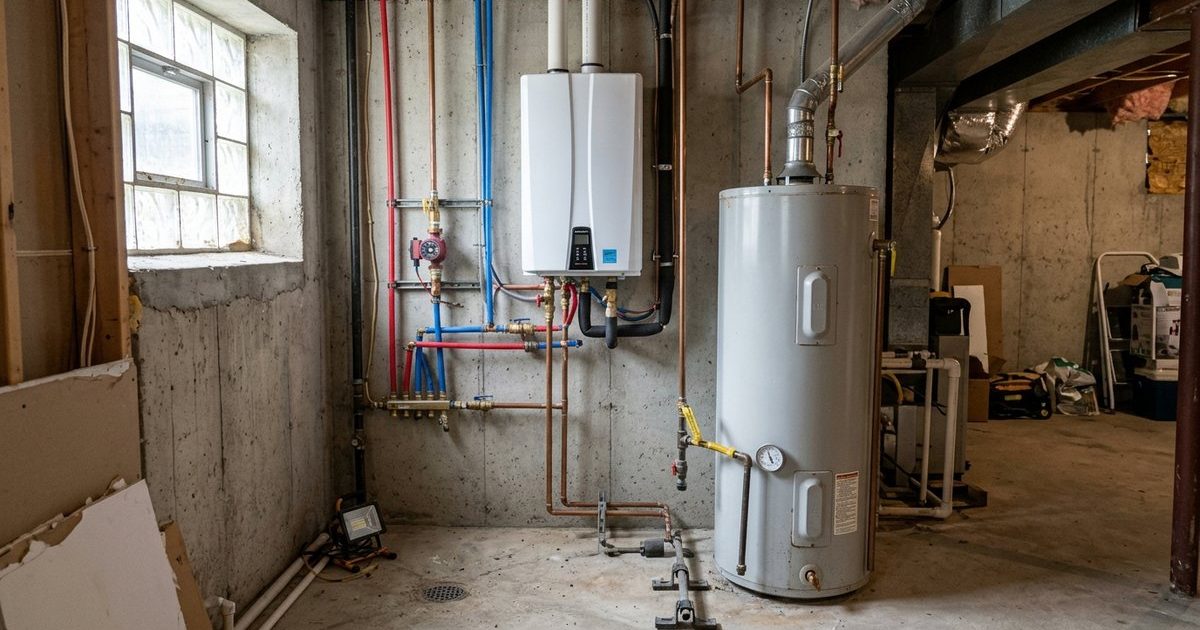
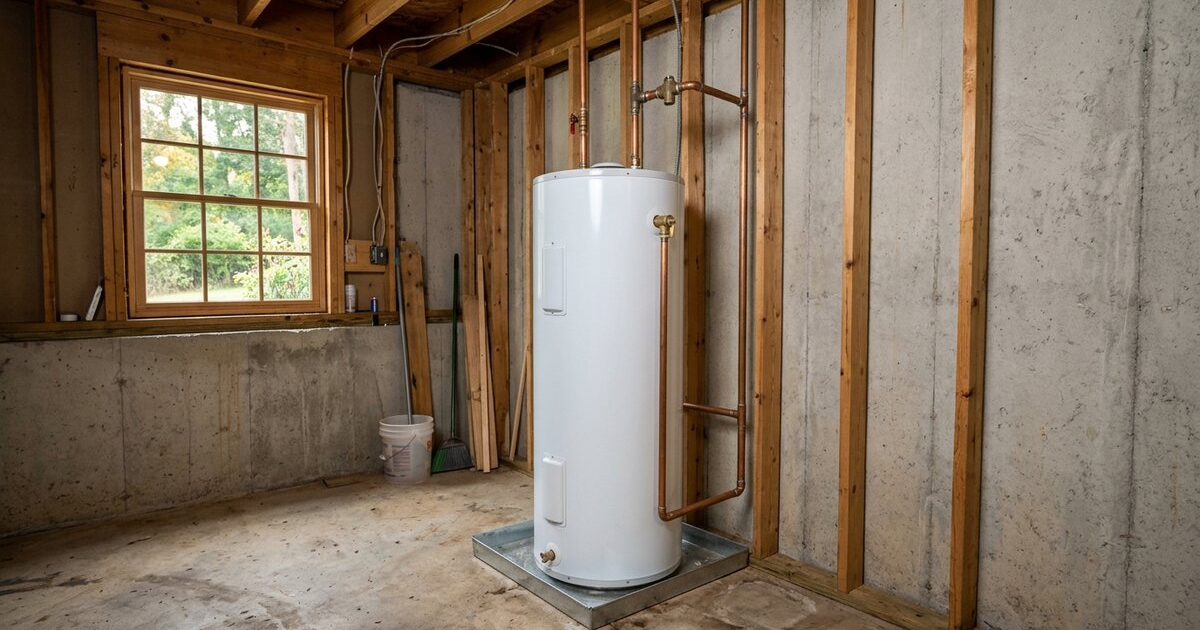
Repair your water heater when a single part has failed, such as a thermostat, heating element, igniter or valve, and the heater still has years left in it. Replace it when the tank itself is leaking, the hot water is rusty from inside the tank, or the heater is near the end of its normal life and the repairs keep coming. Age, the part that failed and how much hard water scale is inside the tank decide most cases in Harrisonburg homes.
Start With the Heater's Age
Age is the first thing to check, because it changes how much a repair is worth. The U.S. Department of Energy says that most storage water heaters last 10 to 15 years, while tankless water heaters can last more than 20 years.
The date is usually on the label on the side of the heater, either printed out or hidden in the serial number. If you can't read it, a photo of the label helps when you call.
A rough guide:
- Well inside its normal life. A repair usually makes sense. Fix the part and keep the heater.
- Getting close to the end. Weigh the repair against the heater's age. A small, cheap fix may still be worth it. A big one often is not.
- Past its normal life. Replacing it is usually the better spend, even if a repair is possible.
Hard water can shorten that life. Our guide to hard water and your water heater explains how scale wears a tank out early.
Problems That Are Usually Worth Repairing
These problems often come from one part, and that part can be swapped:
- No hot water at all. Often a failed heating element, a pilot or igniter fault, or a tripped breaker. The cause depends on whether the heater is gas, propane or electric.
- Lukewarm water, or hot water that runs out fast. A worn element, a thermostat set too low or failing, or a tank half full of sediment.
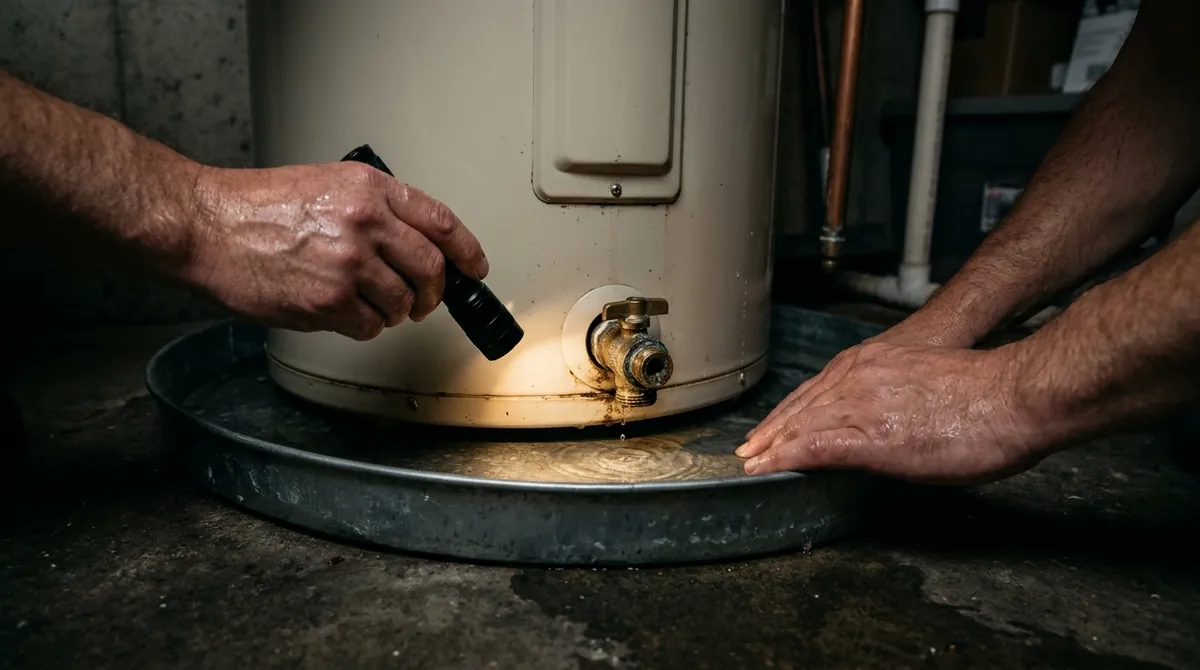
- A leak from a valve or fitting. Water from the relief valve, the drain valve or a pipe joint can often be fixed without replacing the heater.
- A rotten egg smell from the hot water only. This is common on Valley wells. It often comes from the anode rod, a metal rod inside the tank, reacting with the water. A different anode rod or well water treatment can help.
- Error codes on a tankless unit. Many codes point to scale, flow or ignition. Descaling or a part repair may clear it.
Signs It Is Time to Replace
These problems point to the tank itself, and a tank can't be patched:
- Water leaking from the tank body. If the leak is from the tank and not a valve or fitting, the tank has failed. Turn off the cold water valve above the heater and its power or gas, and call.
- Rusty or brown hot water from the tank. If only the hot side runs rusty and the anode rod is used up, the inside of the tank may be rusting through.
- Loud rumbling that flushing doesn't fix. That noise is water boiling under a layer of scale on the tank bottom. Caught early, a flush may help. A tank packed solid often isn't worth saving.
- Repeat repairs. A heater that needs a new part every few months is telling you something.
- Your needs have changed. A bigger household that keeps running out of hot water may need a larger heater, or a tankless one, not a repair.
How Hard Water Changes the Answer in the Valley
Much of the Shenandoah Valley sits on limestone, so well water here is often hard. A Virginia Cooperative Extension study of Rockingham County household water named hardness, along with iron and manganese, total dissolved solids and bacteria, as the county's main water problems.
Heat pulls the minerals out of hard water as scale. In a tank, it settles on the bottom and covers the heating element or the burner side, so the heater works harder for less hot water. In a tankless unit, it coats the heat exchanger and sets off error codes.
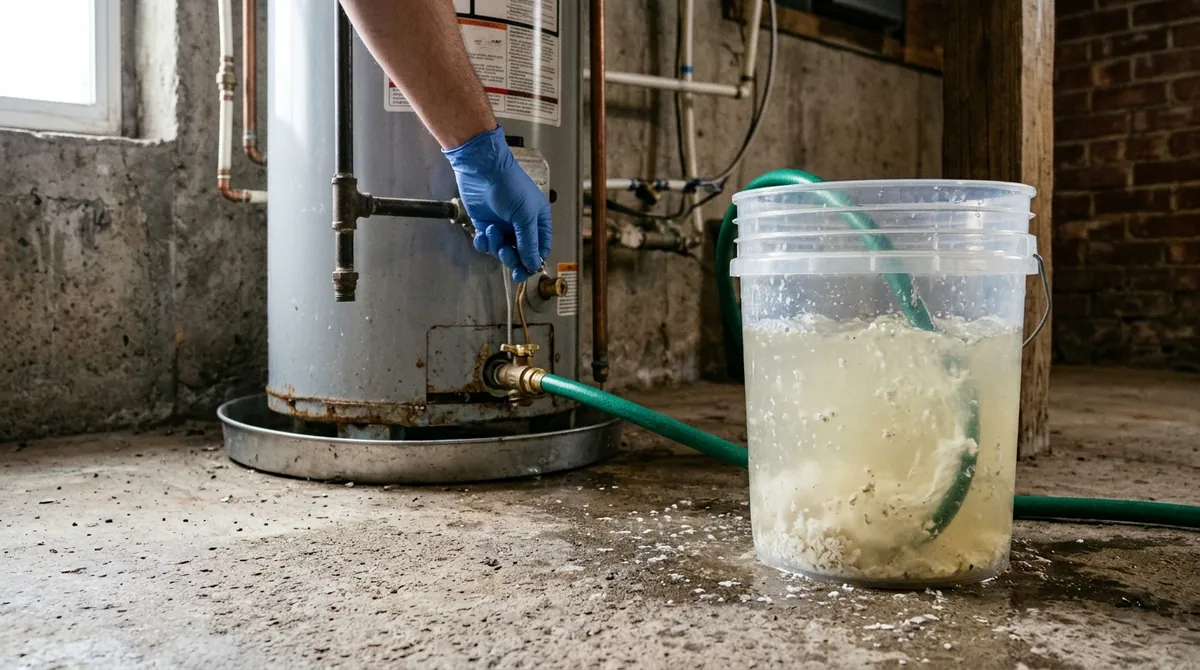
The Department of Energy suggests you drain a quart of water from your water tank every 3 months to remove sediment that impedes heat transfer and lowers the efficiency of your heater, following the manufacturer's directions. On hard Valley water, that habit helps. But if the scale caused the failure, a repair or a new heater alone won't stop it coming back. Treated water protects the next heater too, which is why we look at your water as well as the heater.
What Goes Into the Cost
We don't quote repairs over the phone, because the same sign can have several causes. These things move the price either way:
- The part that failed. Some parts swap quickly. Others take more time or need to be ordered.
- Brand and age. Parts for older heaters can be harder to find.
- Fuel type. Gas, propane and electric heaters use different parts.
- Scale and sediment. A heavily scaled tank may need a flush first, or may not be worth fixing.
- For a replacement: the size and type of the new heater, any changes to the venting or plumbing, and whether a permit is needed. Check with your county or city building department, such as Rockingham County or the City of Harrisonburg, before the work is scheduled.
- Travel from our shop on Route 42 in Linville.
A repair on a younger heater usually costs far less than a new one. On an old heater, the money you spend on a repair buys fewer years. That is the trade off to weigh.
If you are leaning toward a new heater, our guide to tank vs tankless water heaters covers the choice.
Questions to Ask Before You Decide
- How old is the heater, and how long does that type usually last?
- What exactly failed, and is it a part or the tank?
- Is scale or sediment part of the problem?
- If I repair it now, what is likely to fail next?
- If I replace it, what size and type fits my household?
- Will hard water do the same thing to a new heater?
A good technician answers all six before you decide.
How We Handle Repair or Replace Calls
Here is how it works with us:
- Tell us the brand. Call Monday to Friday, 8am to 5pm, with the brand, the age if you know it, the fuel type and what the heater is doing. We tell you up front if we can service it.
- Find the cause. We check the parts, settings, valves and the tank, and look for scale and sediment.
- Explain both options. We tell you what failed, what a repair involves, and when a new heater makes more sense. You decide.
- Fix and test, or install the new heater, then check that hot water reaches your taps.
- Look at the water. If scale caused the problem, we can run a free basic water test and explain how treated water protects the heater.
See our water heater repair page for more, or our water heater installation and replacement page if it is time for a new one.
Water Heater Trouble in Harrisonburg?
Pure Water Pure Air repairs and replaces water heaters across Harrisonburg, Dayton, Timberville, Broadway and the rest of the Shenandoah Valley, and we explain your options before we change anything.
Call (540) 830-7963. We are open Monday to Friday, 8am to 5pm. Leave a message after hours and we will call you back. Virginia contractor license 2710018903.