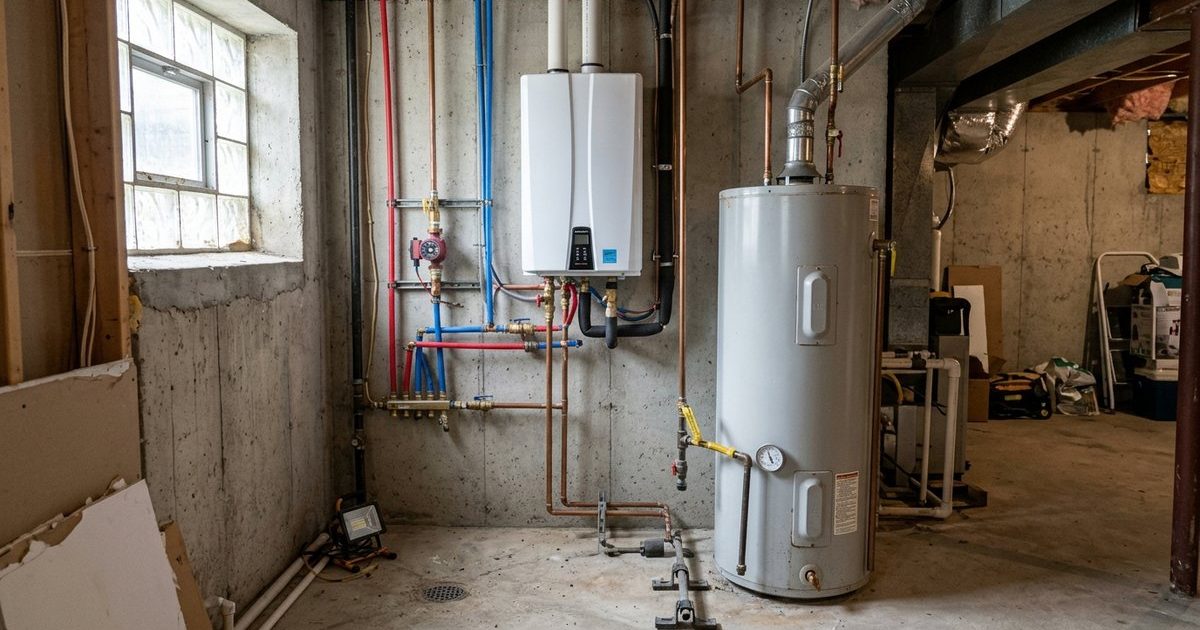
A tank water heater stores a set amount of hot water and keeps it warm all day. A tankless heater warms water only while a tap is open, so it does not run out the same way, but it has to be sized for how many taps you run at once. For most Harrisonburg homes the choice comes down to four things: how much hot water you use at the same time, the space you have, your budget, and how hard your water is.
How Each Type Works
Both types do the same job. They do it in very different ways.
The Tank Water Heater
A tank heater is the tall cylinder most of us grew up with. Cold water comes in at the bottom. A burner or heating element warms it, and the hot water sits at the top, ready for the next shower.
The tank keeps that water hot whether you use it or not. When you drain it faster than it can reheat, you get the cold shower at the end of a busy morning.
The Tankless Water Heater
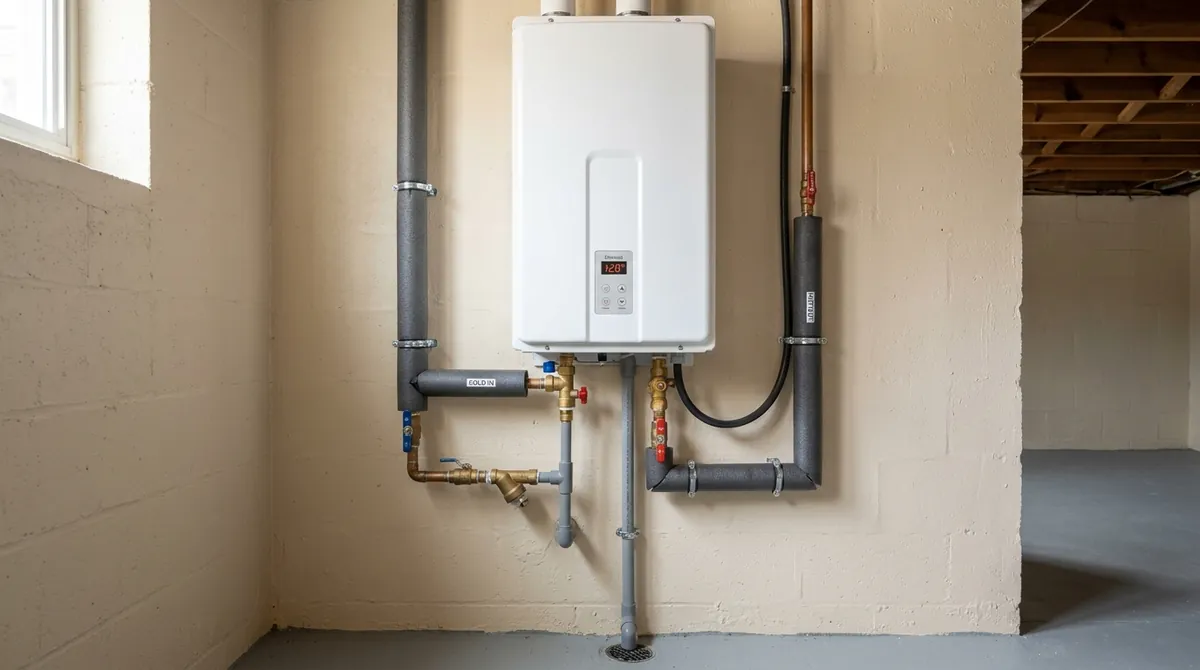
A tankless heater is a box about the size of a carry-on bag that mounts on a wall. When you open a hot tap, water flows through it and a burner or element heats it on the spot. When you close the tap, it stops.
There is no stored water to keep warm. The limit is flow: a tankless unit can only heat so many gallons per minute. Run the shower, the dishwasher and the washer together and an undersized unit will struggle.
Tank vs Tankless at a Glance
| Tank | Tankless | |
|---|---|---|
| Hot water supply | Set by tank size; can run out | Steady, limited by flow rate |
| Space | Floor space for the tank | Mounts on a wall |
| Energy use | Keeps water hot all day | Heats only when a tap is open |
| Upfront cost | Usually lower | Usually higher, more so when switching from a tank |
| Hard water | Scale settles at the bottom | Scale can clog narrow passages |
| Upkeep | Periodic draining and checks | Periodic descaling flush |
Hot Water Supply: Running Out vs Running Short
This is the question most people start with.
With a tank, you have a fixed amount ready. A family that showers back to back in the morning, then runs a load of laundry, can empty it. Then you wait while it reheats.
With a tankless unit, you do not run out over time. But you can run short at one moment if too many taps are open. So sizing matters more. We look at how many fixtures your household uses at the same time, not just how many people live there.
A good rule of thumb: if your complaint is "the hot water runs out halfway through the third shower", tankless can help. If your complaint is "the shower goes cold when someone starts the dishwasher", the fix is careful sizing, whichever type you choose.
Energy Use and Running Cost
A tank heater loses some heat all day, even overnight, because it keeps a full tank warm. A tankless heater avoids most of that standby loss.
The U.S. Department of Energy says that for homes that use 41 gallons or less of hot water daily, demand water heaters can be 24% to 34% more energy efficient than conventional storage tank water heaters. Savings shrink as daily hot water use goes up, so a large household may see less of a gain.
How much that saves you depends on your fuel, your usage and the model. We will not promise a dollar figure without looking at your home. We can walk you through what affects it.
Space and Installation
A tankless heater frees up the floor where a tank used to sit. In a tight basement or utility closet in an older Harrisonburg or Bridgewater house, that space can matter.
Switching from a tank to tankless is not always a straight swap. Depending on the unit and fuel, it may need new venting, a larger gas line or electrical work. That is part of why the upfront cost is usually higher. Replacing a tank with another tank is often simpler, because the connections are already there.
Ask us which fuel types we install for your home. We check your current setup on the first visit so the quote reflects the real work.
Why Valley Water Changes the Choice
This is the part most comparison guides skip, and it matters a lot here.
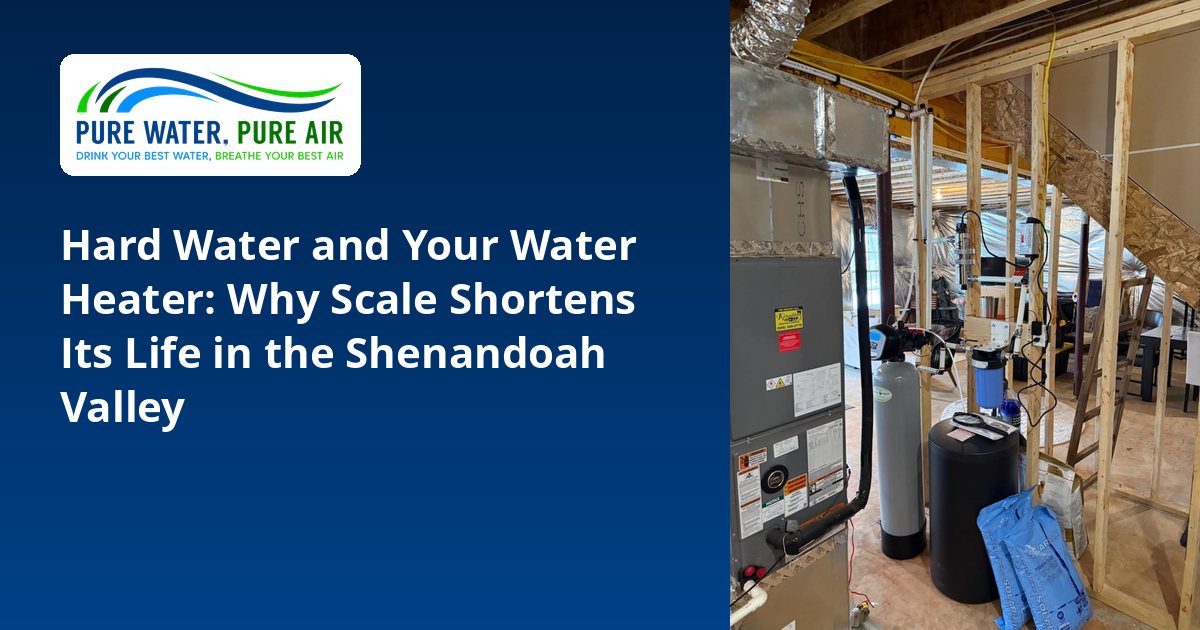
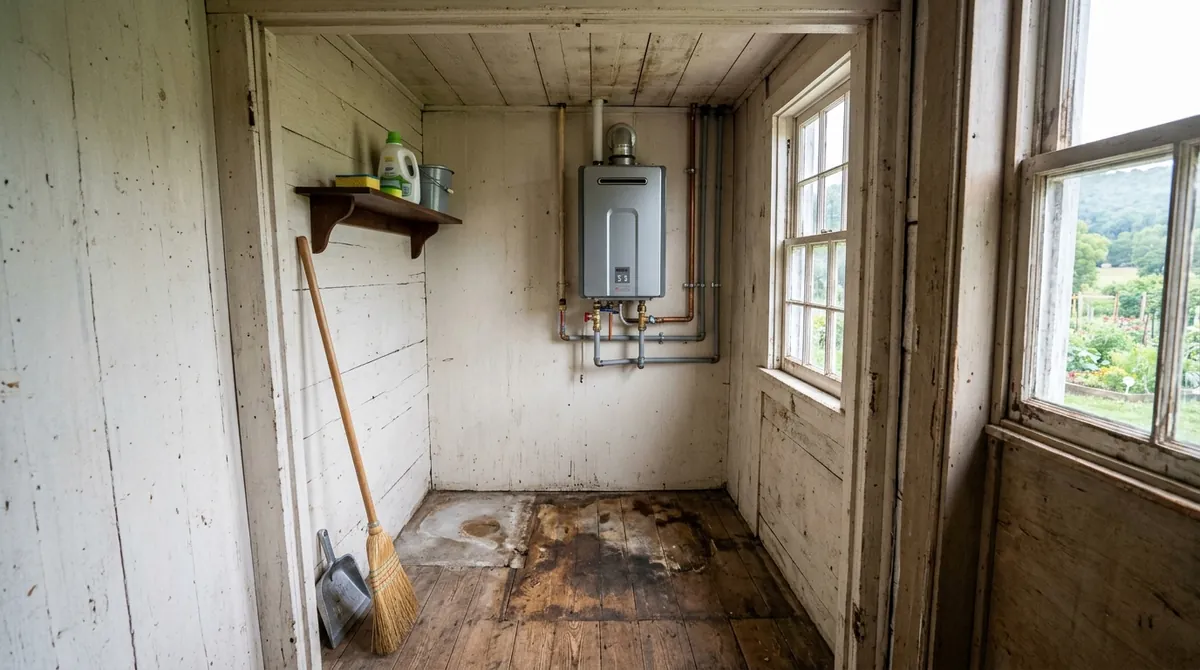
Much of the Shenandoah Valley sits on limestone. Water moving through that rock picks up calcium and magnesium, which makes it hard. City water in Harrisonburg can still be hard, and many wells around Linville, Broadway and Dayton are harder still.
When hard water is heated, the minerals drop out as scale.
- In a tank, scale settles on the bottom and on the heating parts. You may hear rumbling or popping as the burner heats through it.
- In a tankless unit, water passes through a narrow heat exchanger. Scale builds up on those small passages and can cut flow or trigger an error code. Many units flag scale or low flow on the display.
So with tankless, water quality is not optional. If your water is hard, a softener ahead of the heater helps keep scale out of the heat exchanger. Without treatment, plan on regular descaling flushes.
We cover this in more detail in our guide to how hard water affects your water heater.
Upfront Cost vs Long-Term Cost
We do not list prices here, because the right number depends on your home. These are the things that move the price:
- The type and size of the unit. A larger tank or a higher-flow tankless unit costs more.
- Fuel and venting. A tank-to-tankless switch may need new venting or a bigger gas or electrical supply.
- Location. A tight closet or a long run to the vent adds labour.
- Water treatment. If your water is hard, adding a softener protects the new heater, and it is part of the full cost of ownership.
- Upkeep over the years. Tankless units need descaling. Tanks benefit from periodic draining.
A tank is usually cheaper on day one. A tankless unit costs more up front and may cost less to run, depending on your usage. Treating hard water helps either one last.
Which One Fits Your Home?
A tank heater often makes sense when:
- Your current tank is failing and you want a simple replacement.
- Several people need hot water at the same moment, and you would rather not size up a large tankless unit.
- You want the lower upfront cost.
A tankless heater often makes sense when:
- You keep running out of hot water during a busy morning.
- You want the floor space back.
- You use a moderate amount of hot water and want to cut standby loss.
- You are willing to treat hard water or descale on a schedule.
If you are on the fence, start with the water. Hard water is the biggest threat to a tankless unit in the Valley, and it shortens tank life too.
Questions to Ask Before You Choose
When you talk to an installer, ask:
- How did you size this unit for my household?
- What venting, gas or electrical changes does my home need?
- How hard is my water, and what does that mean for this heater?
- What upkeep does this model need, and how often?
- Which fuel types do you install?
A good installer answers these before quoting. Customers mention that our team takes time to explain the equipment and how it works.
How We Help in Harrisonburg
Our shop is on Route 42 in Linville, about 8 miles north of Harrisonburg. Here is how a water heater visit works with us:
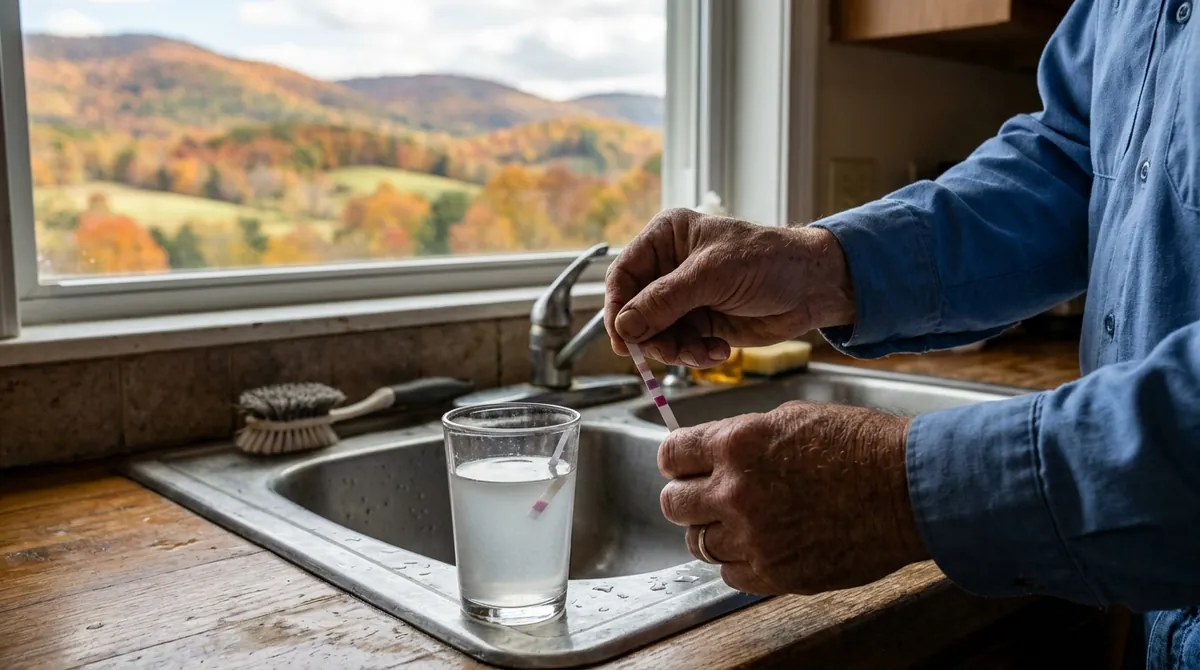
- Free basic water test. We test your water on site for hardness. It is a basic test, not lab-certified, and it tells us if scale is a risk for a new heater.
- Size and fuel check. We look at your space, your current fuel and how many taps you run at once.
- Clear options. We explain tank and tankless for your home, and if a softener should go in ahead of the heater.
- Install and walk-through. We install, check for leaks, test the hot water at your taps and show you the upkeep.
See our tankless water heater installation page for how we set up and protect a tankless unit. If you would rather replace a tank with a tank, our water heater installation and replacement page covers that. If your current heater is acting up, start with water heater repair.
Thinking About Tankless in Harrisonburg?
Pure Water Pure Air installs tank and tankless water heaters across Harrisonburg and the Shenandoah Valley, and we look at your water first so the heater you choose is protected from scale.
Call (540) 830-7963 or contact us to book a visit. We are open Monday to Friday, 8am to 5pm. Leave a message after hours and we will call you back.